
Most photographers spend a lot of time thinking about how an image will look on a phone, tablet, or computer screen. After all, that’s where clients first see their images. But what if you approached every session with the final printed piece already in mind?
The simple shift from creating images for social media to creating images for the wall can dramatically improve your photography—and your clients’ experience.
Start with the End Product
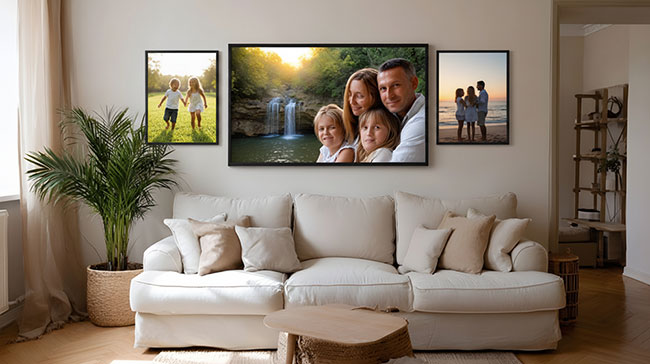
Before you press the shutter, ask yourself one question: Where will this photograph live? Will it become a 30×40 statement piece above the fireplace? A canvas in a family room? A two-page album spread? A framed portrait in a hallway gallery?
Thinking about the finished product changes how you compose, light, and pose your subjects.
Leave Room to Design
It’s tempting to fill the frame with your subject, especially when shooting for Instagram or Facebook. But oversized wall portraits often need breathing room.
Leaving a little extra space around your subject gives you flexibility for different print sizes without sacrificing important details. It also creates a more balanced, timeless composition that feels at home on a wall instead of confined to a phone screen.
Compose Beyond the Crop
Different products require different compositions. A square social media post may crop beautifully, but a panoramic canvas, album spread, or vertical framed portrait each tells a different story.
Whenever possible, capture a variety of compositions during each setup:
- Wide environmental portraits
- Medium compositions
- Tight emotional close-ups
- Vertical and horizontal orientations
- Negative space for wall art or album design
Giving yourself options during the session saves time later and opens the door to more product possibilities.
Think in Collections
Instead of creating one “hero” image, consider photographing with a wall gallery in mind. A striking close-up paired with a wider environmental portrait and a meaningful detail image can become a beautiful three-piece display that tells a complete story. Clients often connect more deeply with a collection than a single photograph because it captures multiple moments and emotions from the same session.
Lighting That Lasts
Images destined for large prints benefit from thoughtful lighting and clean backgrounds. Fine details, subtle shadow transitions, and natural skin tones become much more noticeable when enlarged.
Taking an extra minute to refine your lighting or simplify a distracting background can make the difference between a nice photograph and one your client proudly displays for years.
Photography That Lives Beyond the Screen
Digital images are wonderful for sharing, but printed photographs become part of a family’s everyday life. They decorate homes, preserve memories, and often become treasured heirlooms passed from one generation to the next.
When you begin every session by imagining where the finished photograph will hang instead of how it will appear on social media, you’ll naturally create stronger compositions, offer more meaningful product options, and deliver artwork your clients will enjoy long after the notifications have disappeared.
The next time you raise your camera, don’t just shoot for the screen. Shoot for the wall.





















































No Comments
Leave a comment Cancel