
There are moments in photography that happen so fast you don’t fully process them until later, when you are back home, the card is downloaded, coffee in hand, staring at the screen thinking, wait… did this really just happen? This was one of those moments.
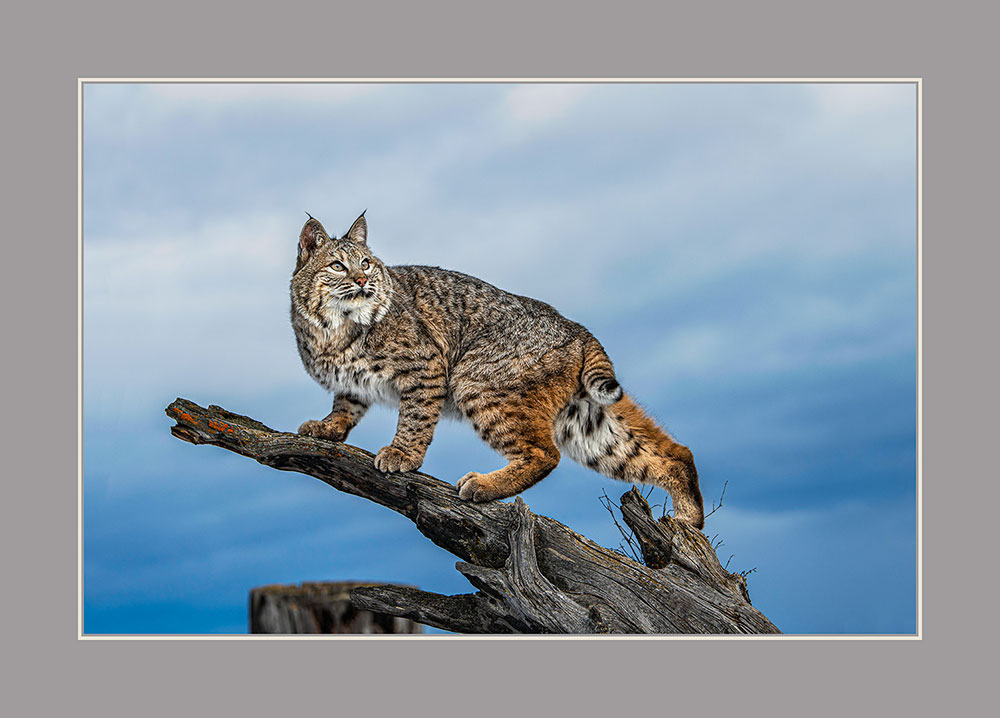
At the time, it didn’t feel like much of anything was happening at all. I was standing there with my camera ready, waiting and watching, letting the scene unfold at its own pace. No rush. No pressure. Just awareness. The bobcat moved quietly through the enclosure, then suddenly jumped up onto a log, struck a few quick poses, and jumped back down just as fast. There was no time to react, no time to check settings, and definitely no time to review images. The moment was over almost as soon as it began.
This photograph was taken in Montana at a wildlife game farm used for wildlife photography and film work. I was shooting Nikon at the time, using my Nikon D850 paired with a 70–200mm lens, a setup I trust when moments are unpredictable and fleeting. My settings were already dialed in at ISO 200, f/5, and 1/1600 of a second, because animals do not wait for you to catch up or rethink your choices.
The truth is, I did not remember much about the moment at all once it was over. We moved on, the day continued, and I never had time to review the images in the field. By the time I got home, I had forgotten nearly every detail of what had happened during the session.
It wasn’t until later, back home with coffee finally kicking in, that the moment truly registered. Seeing the image on the screen brought it all back. The timing. The posture. The confidence in her stance. It felt like watching the moment happen again, only slower this time.
Of course, people always ask, would you go back to the game farm again?
And honestly, the answer is probably not. It was a great experience, but there’s really no need to return. I want to capture the animal in the wild, but cats are, by far, my favorite species. And getting the chance to spend time that close to them, hearing them purr, watching every movement, and every subtle shift of confidence and quiet power, was truly priceless.
From a post-processing standpoint, this image came out of the camera looking exactly how I had hoped. I did not have to do much beyond basic adjustments to whites, blacks, contrast, highlights, and shadows. The only real change was removing a few distracting branches along the left side of the frame.
This image is a good example of how I teach photography during my workshops. My goal is for everyone to learn how to expose correctly in camera, so you spend less time editing and more time “Clickin”.

















No Comments
Leave a comment Cancel