
When a local dance school reached out about photographing their upcoming season, I figured it would be a fun challenge. I’d photographed ballet before, but not enough to feel fluent in it. The few times I had tried, I left feeling puzzled. I’d spent hours perfecting the lighting, composition, and exposure, only to have the dancers dislike the photos.
From my point of view, they were technically perfect. But from theirs, they weren’t even close. It took me a while to understand why. Dancers are craftspeople, just like photographers. They spend years training every muscle to move precisely, down to the angle of an ankle or the line of a hand. While I was focused on the light, they were focused on the form. And when those details weren’t right, the whole image fell apart for them.
A dancer friend once told me, “I didn’t even notice your lighting, Rich. I noticed my ankle!” That was the turning point. Or should I say… pointe? Sorry…not sorry.
I realized I’d been photographing something I didn’t yet understand, and no amount of lighting or technical skill could fix the one thing missing from those images. I grew up skateboarding and surfing, and I can capture those moments instinctively because I feel them, the rhythm, the tension before the release, the sound that signals a perfect trick. With dance, I just had to learn a different rhythm.
So I started asking questions:
Does this look right to you?
What don’t you like about this one?
I’d sneak in a question about lighting here and there to comfort the fragile artist in me, but to these craftspeople, it was never about the lighting.
This image, “My Mentor,” wasn’t even on the shot list. It happened in between the scheduled portraits.
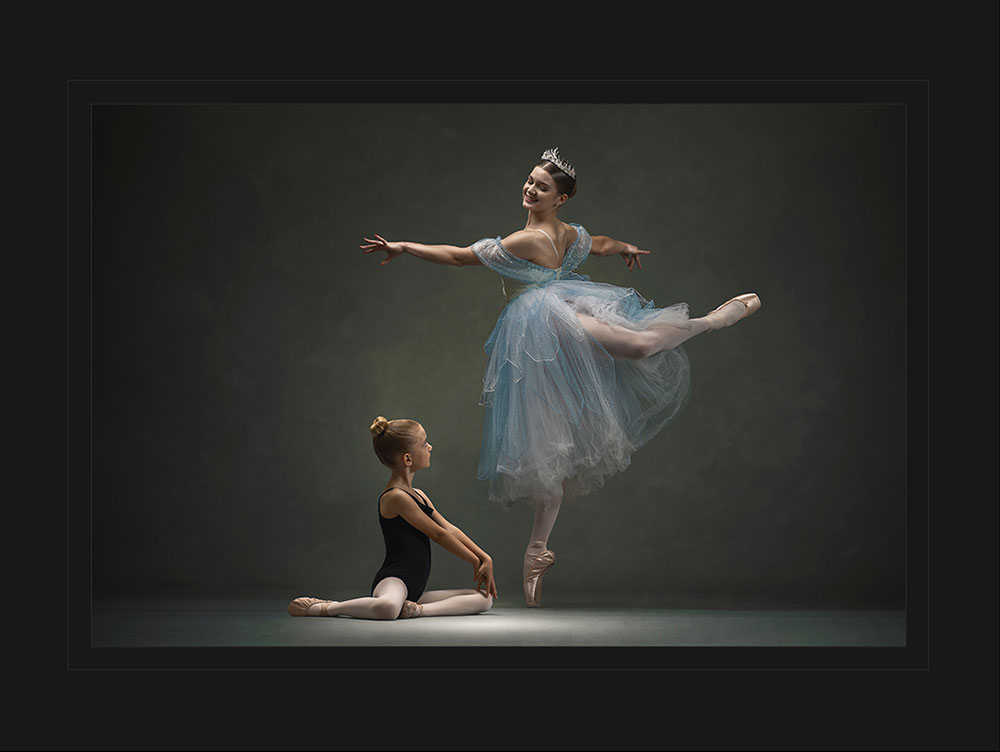
We had about fifty dancers that day, from age four to eighteen. The younger ones required patience and playfulness to keep them focused, while the older ones chased perfection in every frame. During one of the younger sessions, a mother mentioned that her daughter’s instructor, Brooke, had once been her own kindergarten student. The idea that one generation was now teaching the next immediately caught my attention.
As Brooke passed by, the little girl called out her name and ran to greet her. I asked if they’d take a photo together, not as teacher and student, but as mentor and mentee.
I positioned Brooke in a graceful pose, mid-movement, and had the young dancer seated on the floor, watching her, mirroring admiration, inspiration, and the passing of knowledge. We shot a handful of frames, making small adjustments each time. When I said, “I think your ankle’s a little bent here, should we try again?” Brooke laughed, nodded, and thanked me. That simple suggestion earned her trust. She knew I finally saw what mattered most to her, her craft, and the little girl watching her put it into practice.
The Technical Side
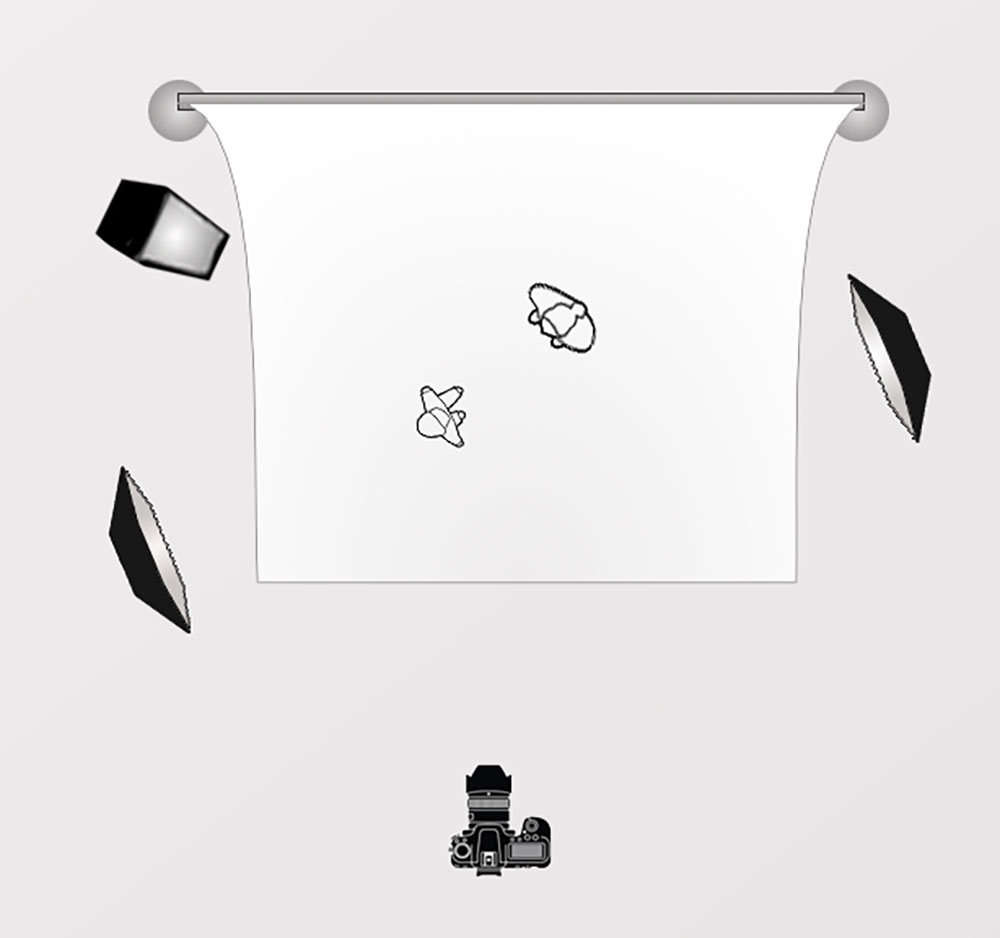
This was a three-light setup, all Godox AD600s:
- Key Light: Large Octabox, camera left
- Fill Light: Smaller Octabox, camera right
- Rim Light: 12×48″ strip box with a grid
I wanted the lighting to sculpt the dancers without overpowering them. The background glow was enhanced in post to create a subtle vignette, a soft spotlight that draws the viewer’s eye to the connection between the two subjects.
Camera: Nikon Z7II
Lens: Nikkor 85mm f/1.8 (my go-to lens)
Settings: f/4.5 • 1/125 sec • ISO 100
Because both subjects were in a controlled, stationary pose, I could keep the shutter moderate and the depth of field slightly shallow to separate them from the backdrop while maintaining clarity in both faces.
This session taught me something simple but valuable, when you photograph someone’s craft, you have to learn their language first. Technical precision will get you a clean shot, but understanding why something matters to your subject will get you the right one.