My camera wasn’t raised. It wasn’t even in my hands. It was hanging by my side exactly where it often is when you think you’re done shooting. Over the years, I’ve learned that wildlife doesn’t care about your plans, your hunger, or your conversations. Because of that, my camera is almost never turned off until I’m back in the vehicle, and even then, it is on most of the time, so I am ready. This time, that habit paid off.
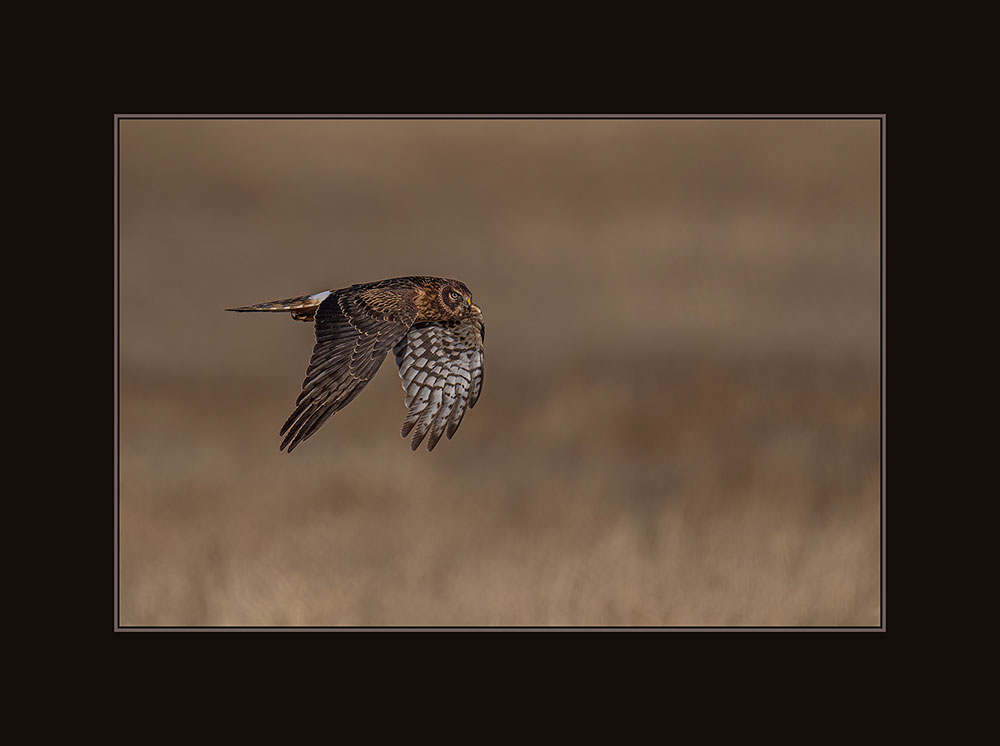
The Northern Harrier cut through the muted Colorado landscape with purpose—wings steady, flight smooth and controlled. I reached down instinctively and brought the camera up in one fluid motion, tracking the bird as it passed. There was no time to think about composition or second-guess settings.
For this image, I was shooting with my Sony A1 paired with a 600mm lens, a setup I trust completely when speed, accuracy, and instinct all must work together. The gear wasn’t chosen for this moment specifically; it was chosen earlier in the day for photographing wildlife in open country.
My settings were already dialed in:
• Shutter speed: 1/2000 of a second
• Aperture: f/4
• ISO: 640
Those choices mattered. A fast shutter speed to freeze motion. A wide aperture to isolate the subject. An ISO high enough to support both without hesitation. When the Northern Harrier appeared, I didn’t change a thing because I didn’t need to. I grabbed a few frames, and that was it. As the bird disappeared into the distance, I heard Gary ask,
“Did you get that?” I looked over, smiled, and replied, “Of course,” with a wink.
This image came out of the camera looking great, so very little post-processing was needed beyond basic adjustments to whites, blacks, contrast, highlights, and shadows. I did flip the image, as I felt it was stronger visually with the bird flying from left to right. This approach reflects how I teach photography during my workshops. My goal is for everyone to learn how to expose correctly in camera, so you spend less time editing and more time “Clickin.”.